

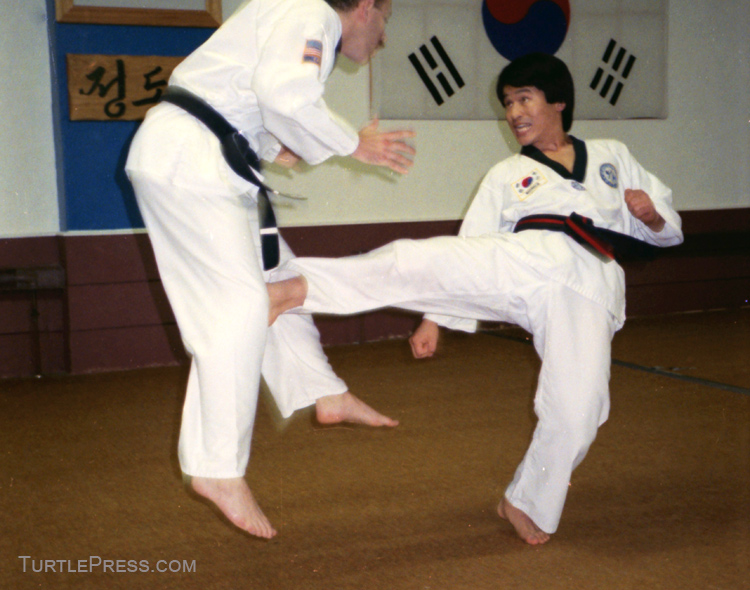
In a hostile situation, you have to make a lot of decisions very quickly. In this excerpt from Taekwondo Self-defense: Taekwondo Hoshinsool, Sang H. Kim summarizes the key stages of a self-defense situation and the important decisions you'll need to make in each stage.
1. ASSESS:

• Trust your gut feeling, stay cool.
• Size up the situation:
1. Hostility intensity: deadly threat, mild conflict, casual unpleasantness.
2. Environmental factors: indoor, outdoor, sloping ground, exits, available environmental weapons.
3. Weapons: attacker has a gun, knife, pipe, or bat.
4. People factors: numbers, size, athleticism, position.
• What are your options? If possible, escape as fast as you can. If you can’t escape, breathe deeply, stay cool and control the distance.
• Prepare to respond.
2. ATTACK:
• Fight back aggressively. But be aware of conserving energy: you don’t know how long a confrontation may last.
• Strike at the most direct, vulnerable target such as the eyes, nose, neck, rib cage, or groin
• Focus on causing more pain to your attacker than his motive to attack you can overcome. i.e. Make his attack cost him more than it’s worth.
• Overpower the assailant. Hit harder with every advancement. Try to build fear in him.
• Be flexible.
• Look for better options.

3. ADAPT:
• Expand your options: Exploit his weaknesses. Constantly look for ways to end the fi ght, no matter how unconventional.
• Reassess: continue to fight until you can escape, over power the assailant or negotiate for your safety. Use physical, verbal and psychological tactics at all stages.
• Constantly work toward ending the fight.
Additional Tips:
- Be realistic: know what you are capable of and make choices within your limits.
- Be realistic in assessing the assailant: Don’t get intimidated by posturing.
- Be realistic with your objectives: fight when necessary and then get out as quickly and safely as possible.
- Use your wits and common sense to resolve the conflict if possible.
- Remember a physical fight is the last resort but it does not mean you should fight to the death. Be flexible and always look for a way out. Fighting, in most cases, begets more fighting and brings no solutions.